El Alma al Aire (transl. The Bared Soul) is the sixth studio album recorded by Spanish singer-songwriter Alejandro Sanz. It was released on 25 September 2000 by Warner Music Spain, following the success of Más (1997) and the artist's hiatus from music in 1999. It is a pop album that features more ballads than its predecessor, as well as uptempo numbers. The album was produced by Sanz's frequent collaborator Emanuele Ruffinengo, while other musicians, including Vicente Amigo, returned to collaborate with the artist following Más.
Following its release, El Alma al Aire was met with generally positive reviews from music critics for its compositions and musical styles, although a few reviewers felt it did not exceed its predecessor's quality. The album received several accolades, including the Latin Grammy Awards for Album of the Year and Best Male Pop Vocal Album and a Grammy nomination for Best Latin Pop Album in 2001. Commercially, it topped the Spanish albums chart, where it was the best-selling album of 2000 and was certified 13× platinum for shipping over 1.3 million copies. In Latin America, the album reached numbers one and three in Argentina and Mexico, respectively. In the United States, it peaked at number three on the Billboard Top Latin Albums chart and was certified double platinum in the Latin field.
Three singles were released from El Alma al Aire: "Cuando Nadie Me Ve", "Quisiera Ser", and the title track, with music videos accompanying all three singles. To further promote the album, Sanz embarked on El Alma Al Aire Tour in 2001, where he performed in Latin America, Spain, and the US.
Background and recording
In 1997, Alejandro Sanz released his fifth studio album, Más. It sold over six million copies and would eventually become the best-selling record of all time in Spain. To promote Más, he embarked on a tour of the United States, Latin America, and Spain in 1998. In 1999, Sanz announced he was taking a hiatus from the music scene for a year to focus on his private life. On 7 January 2000, Spanish newspaper ABC reported that Sanz was set to record a new album that would be released sometime in the year. In May 2000, Sanz moved to Miami and began working on his next project. Recording took place at the Hit Factory in Miami, Florida, while Emanuele Ruffinengo handled the album's production; he had produced Sanz's previous two studio albums.
On 7 July 2000, Sanz announced the album's title, El Alma al Aire, and revealed that it would feature ten original songs. Around the making of the album, Sans explained, "whenever I make an album I am very afraid, but in this case I felt very comfortable. I reconciled myself a little with my defects and found a path that makes me feel very safe". In addition, he stated that he changed both his composing manner and his favorite accompaining musicians. Ruffinengo commented that Sanz explores and polishes his style by going "all the way" without sparing creativity or efforts but also remarked on the challenges of an artist that continues with their style without being repetitive.
Ruffinengo described having several studios set up for the musicians, explaining that "[t]here is a studio for brass, another for strings, one for voice and another for percussion in which the variety of musical options we have is diversified and thus ensure that the needs of the song are met to the letter. One of the peculiarities of recording the songs is that the musicians learned the scores to feel the song more". Several musicians involved in the recording had worked with Sanz on Más, including Vicente Amigo (Spanish guitar), Alfredo Paixao (bass), Lulo Perez (brass), Ludovico Vagnone (guitar), and Luca Jurman (background vocals), while José Miguel Carmona of Ketama fame collaborated on the record as well. Recording and post-production for the album took a total of eight months.
Composition
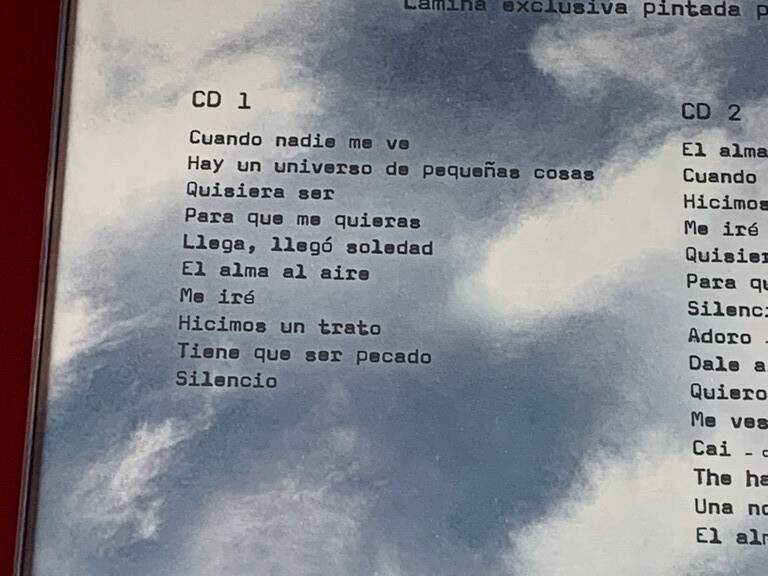
El Alma al Aire is a pop album and consists of ten tracks, all composed by Sanz. According to Daniel Shumski of the Chicago Sun-Times, the record features ballads and "flamenco-tinged" uptempo numbers. In comparison to his previous album, which mixed pop and flamenco, El Alma al Aire leans more towards ballads. Billboard magazine editor Leila Cobo described the songs as "harmonically and melodically complex, with multiple sonic and stylistic layerings and meandering melodic lines." The opening track, "Cuando Nadie Me Ve", is a ballad that tells of a "man's loneliness, of pain as a subtle punishment". On "Hay un Universo de Pequeñas Cosas", Sanz invites the audience to "reflect on the small details that make up the world in which we live." "Quisiera Ser" is a song with an "intimate air that calls for shared celebration" and has a "Latin touch".
Other ballads in the album include "Para Que Me Quieras", "Llega, Llegó Soledad", "Silencio", and "Me Iré" (the latter being described as "nostalgic" by El Diario La Prensa editor Ricardo Leon Pena-Villa). On "Para Que Me Quieras", Sanz chants about "those little moments that you give me". "Llega, Llegó Soledad" is dedicated to Buenos Aires, Argentina, and nd contains influences of swing music. According to Sanz, it "emerges as an invitation to slide through the music and its soft cadence".
"Hicimos un Trato" is a bolero, while "Tiene Que Ser Pecado" is a flamenco rap tune, The closing track, "Silencio", tells of "two children telling each other a poem" and "[s]ilence is requested to listen to them." An editor from El Mundo wrote that it is a reflection of "those who talk a lot and say nothing". "Silencio" also includes a hidden track, "Desde Mis Centros", which was written by Ruffinengo.
Promotion
Release
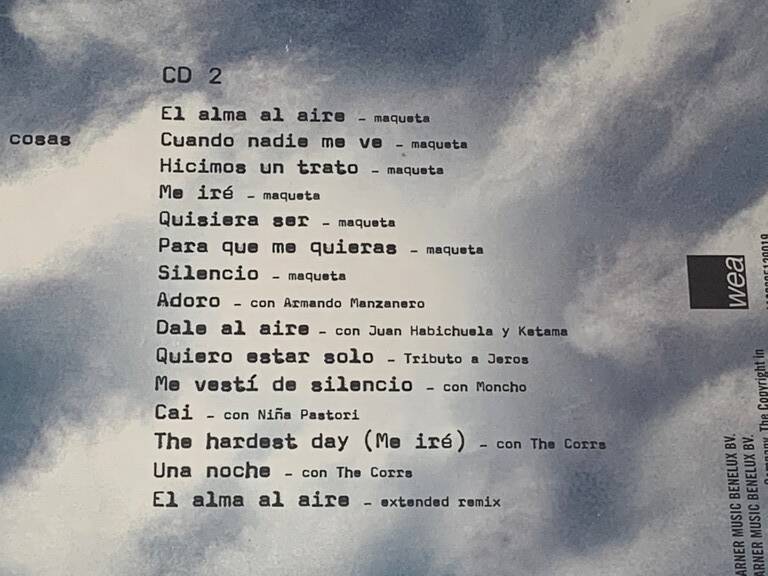
El Alma al Aire was released in Latin America and Spain on 25 September 2000 by Warner Music Spain. A special edition of the album was launched on 11 June 2001 in Spain and Portugal and features an additional disc with five tracks: an English and bilingual version of "Me Iré" with the Corrs, a Spanish-language version of "One Night" ("Una Noche") also with the Corrs, "Adoro" with Armando Manzanero, and a remix of "Tiene Que Ser Pecado". "The Hardest Day" marks the first song that Sanz recorded in English, and the three collaborations with the Corrs were produced by David Foster. "Una Noche" was previously included in the Latin American edition of In Blue (2000), while the duet version of "Adoro" was first recorded for Manzanero's studio album Duetos (2000).
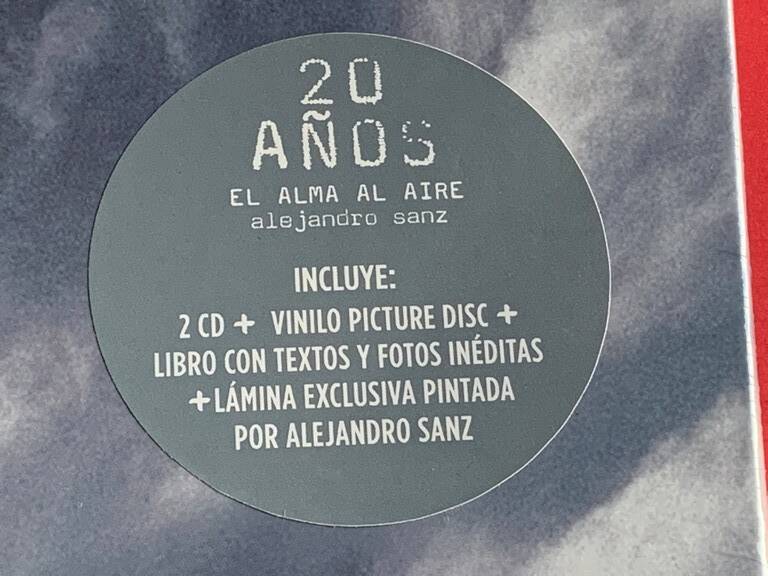
El Alma al Aire was re-released in 2007 and includes demos of "Cuando Nadie Me Ve" and "El Alma al Aire" as well as a DVD with the music videos for "Cuando Nadie Me Ve", "Quisiera Ser", "El Alma al Aire", "Llega, Llegó Soledad", "Una Noche", and "The Hardest Day", and live performances of several of his songs from the album at the concert at the Vicente Calderón Stadium in 2001 during his El Alma al Aire Tour (2001–02). A commemorative 20th anniversary edition of El Alma al Aire was released in 2020.
Singles
"Cuando Nadie Me Ve" was released as the lead single from El Alma al Aire on 18 August 2000. It peaked at number three in Ecuador; number four in El Salvador, Nicaragua, Panama, and Uruguay; number eight in Guatemala; and number twelve on the Billboard Hot Latin Songs chart in the US. The music video for "Cuando Nadie Me Ve" was released on 14 September 2000 and directed by Sebastien Grousset. In the video, which was filmed in various locations in Madrid, Spain, Sanz is seen kissing and fighting with various women in a boxing ring. The visual received a Latin Grammy nomination for Best Short Form Music Video in 2001. "Quisiera Ser" was released as the album's second single on 5 December 2000; it peaked at number nine in Chile, number four in Spain, and number seventeen on the Hot Latin Songs chart in the US. Alejandro Toledo directed the music video for "Quisiera Ser", which was also filmed in Madrid. The music video features Spanish models Esther Cañadas and Elia Galera and Colombian model Martha Lucía Pereiro in a love triangle with Sanz, the latter of whom ends up being poisoned while at a costume party. According to Toledo, he was inspired by "Sleeping Beauty" while adapting to the song's message.
The title track was released as the third single in 2001 and reached number 40 on the Hot Latin Songs chart in the US. Its music video, also directed by Toledo and filmed in Madrid, narrates an immortal man played by Sanz who, throughout history, falls in love with a woman belonging to another. Several Spanish celebrities appear in the video, including Miguel Bosé, Santiago Segura, José Coronado, and Gabino Diego. In addition to the three singles, "Hay un Universo de Pequeñas Cosas" was released as a promotional single for the album in 2001, as was "Me Iré (The Hardest Day)" for the special edition of the record. A music video was released for the latter promotional single and filmed in the Iberian Peninsula. A music video was also made for "Llega, Llegó Soledad".
Tour
To promote El Alma al Aire, Sanz began his El Alma Al Aire Tour on 17 February 2001 in Caracas, Venezuela. Sanz toured throughout Latin America, Spain, and the US. The tour concluded on 22 September 2001 in Tenerife, Spain. His nine concerts at the Auditorio Nacional in Mexico City, Mexico, alone grossed over $2.8 million, the highest-grossing concerts of March, according to Billboard. The set list consisted of songs from El Alma al Aire and his previous albums. In March 2002, Warner Music released the El Alma al Aire en Directo live album on VHS and DVD, which was filmed during a 28 June 2001 show at the Vicente Calderón Stadium in Madrid, Spain.
Critical reception
Upon its release, El Alma al Aire received generally positive reactions from music critics. Rating it three out of four stars, Shumski wrote the tracks "fall into two categories: those that sound as if they were borrowed from Más and those that take cautious baby steps to advance his songwriting abilities". Shumski praised the "clever turns of phrase and cut-above-standard lyrics" as well as Sanz's "velvety vocals and tuneful melodies". The Chicago Tribune critic Achy Obejas stated all the songs in the album are "a Sanz composition: romantic, but realistic, lyrically lush but in fresh and unexpected ways, serious but surprisingly sincere." She commended "Quisiera Ser" as an "addictive hit single".
Ricardo Cores lauded El Alma al Aire for offering "some of the most beautiful songs of his career", citing songs such as "Cuando Nadie Me Ve" as a "sincere track" and the title track for its poetry and music. El Nuevo Herald reviewer Eliseo Cardona opined: "From the beginning, from the first note that catches your ear, 'El Alma al Aire' reveals its immense magnetism" with its "[l]ustful sound massages, metaphors that turn the imagination right and wrong". Cardona concluded, "at a time when pop is producing characters that seem more like caricatures [...] Sanz restores our faith in music".
A few reviewers however felt that the album did exceed the quality of Más. AllMusic editor Stacia Proefrock gave the record three out of five stars, stating that while it was "not as strong as his best albums like Más, El Alma al Aire does present a solid collection of ballads" and praised its string sections. Ernest Lechner reviewed for the Los Angeles Times and rated the disc two-and-a-half stars and out four, citing the artist's talent to make the "kind of crisp, manipulatively romantic music" but criticized the album's "fussy production values". El Norte critic Deborah Davis was left underwhelmed with the album due to "the weak songs included". She felt it has "romantic compositions that can please, but none to inspire an October night." However, Davis praised the choruses on both "Quisiera Ser" and the title track. La Prensa editor Eva Aguilar wrote that the album has "merits" such as "Quisiera Ser", "Para Que Me Quieras", and "Me Iré", but concluded that it does not surpass his previous work.
Accolades
At the 2000 Premios Ondas in Spain, Sanz was awarded Best Artist and Best Album for El Alma al Aire. Seven days later at the Premios Amigo, also in Spain, El Alma al Aire won Best Album while Sanz won Best Male Artist. At the 43rd Annual Grammy Awards in 2001, the record was nominated in the category of Best Latin Pop Album, which went to MTV Unplugged (2000) by Shakira.
At the 2nd Annual Latin Grammy Awards in the same year, Sanz was the biggest winner of the night, winning four awards, including Album of the Year and Best Male Pop Vocal Album, as well as Record of the Year and Song of the Year for the title track. Sanz also won Latin Album of the Year and Male Latin Artist of the Year for the record at the 2001 Premios Gardel.
Commercial performance
Within a week of its release, El Alma al Aire sold over a million copies. In his native Spain, it debuted on top of the Productores de Música de España album chart on the week of 23 September 2000 and was certified 13× platinum by Productores de Música de España for shipping over 1.3 million copies. It was the best-selling album of the year in Spain. El Alma al Aire was certified platinum by the International Federation of the Phonographic Industry (IFPI) for sales of over a million copies in Europe. Elsewhere in the region, it peaked at numbers 5 and 71 in Portugal and Switzerland, respectively. In Mexico, the record peaked at number 3, was certified 5× gold, and has sold over 450,000 units in the country.
In South America, the record was certified platinum in Colombia and Venezuela, double platinum in Chile, and triple platinum in Argentina. It also topped the latter country's national charts. El Alma al Aire sold over 900,000 units throughout Latin America. In the US, it debuted and peaked at numbers 148 and 3 on the Billboard 200 and Top Latin Albums charts, respectively. According to Nielsen SoundScan, the record sold over 125,000 units in the country and was also certified double platinum by the Recording Industry Association of America (RIAA) in the Latin field for shipping over 200,000 copies. By June 2001, El Alma al Aire had sold over 2.4 million copies worldwide.
Track listing
Personnel
The following credits are from AllMusic and from the liner notes of El Alma al Aire:
Charts
Sales and certifications
Release history
See also
- 2000 in Latin music
- List of best-selling albums in Spain
- List of best-selling Latin albums
- List of fastest-selling albums
- List of number-one albums of 2000 (Spain)
References